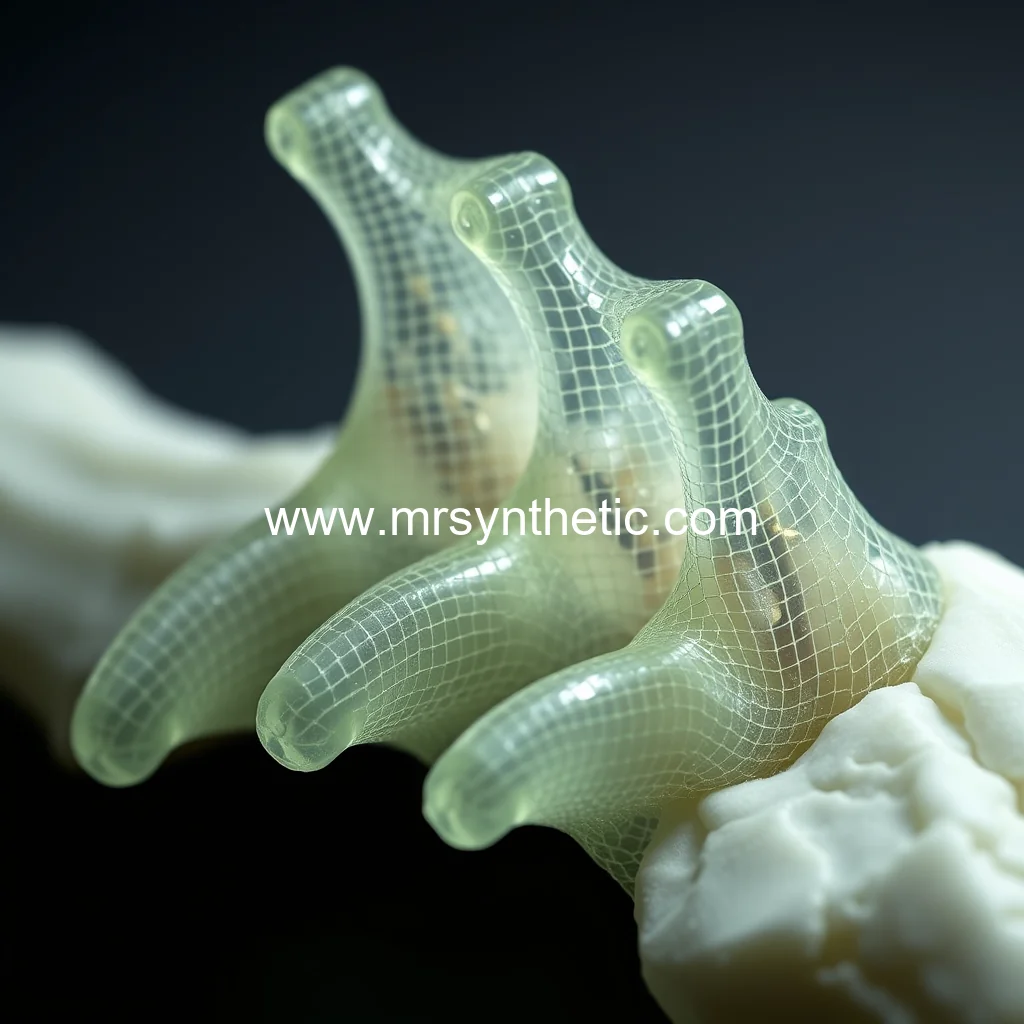
However, it is also highly susceptible to damage from mechanical stress, temperature changes, and chemical reactions. This vulnerability makes it difficult to develop a material that perfectly replicates the properties of cartilage.
Understanding the Challenges of Replicating Cartilage
Cartilage is a complex biological material that has evolved to provide support, cushioning, and flexibility to our joints. Its unique properties, such as its high water content and ability to absorb and distribute mechanical forces, make it an ideal material for various applications. However, replicating these properties in a synthetic material is a significant challenge. The high water content of cartilage makes it difficult to create a material that can maintain its structure and function in a dry environment. Cartilage’s ability to absorb and distribute mechanical forces is also challenging to replicate, as it requires a complex interplay of molecular interactions and structural properties. Additionally, cartilage is highly susceptible to damage from mechanical stress, temperature changes, and chemical reactions, which makes it difficult to develop a material that can withstand these forces.
The Development of Kevlartilage
Despite the challenges, researchers at the University of Michigan and Jiangnan University have made significant progress in developing a synthetic material called Kevlartilage.
One camp is comprised of hydrogel-based materials that are designed to mimic the water content of natural cartilage. These materials are typically made from a combination of natural and synthetic polymers, such as collagen and hyaluronic acid, which are combined with water to create a hydrogel-like substance. The other camp is comprised of materials that are designed to mimic the mechanical properties of natural cartilage, such as its compressive strength and elasticity. These materials are typically made from a combination of synthetic polymers, such as polyurethane and polyethylene, which are designed to mimic the mechanical properties of natural cartilage.
The Challenges of Synthetic Cartilage
Synthetic cartilage materials face several challenges in terms of their ability to mimic the physical properties of natural cartilage. One of the main challenges is the lack of water content, which makes it difficult for cells to thrive. This is because cells need a certain level of water to survive, and synthetic cartilage materials do not have enough water to provide this. Another challenge is the difficulty in replicating the mechanical properties of natural cartilage, such as its compressive strength and elasticity.
This network is designed to mimic the structure of cartilage, with a central core of collagen and a surrounding matrix of proteoglycans.
The Science Behind Cartilage
Cartilage is a unique and fascinating tissue that provides cushioning and support to joints. It is composed of a network of cells, proteins, and other biomolecules that work together to maintain its structure and function. In natural cartilage, the network of proteins and other biomolecules gets its strength by resisting the flow of water among its chambers.
The Science Behind Synthetic Cartilage
Synthetic cartilage is a man-made material designed to mimic the properties of natural cartilage. It is composed of a matrix of collagen fibers and a gel-like substance called proteoglycans. The matrix provides strength and structure, while the proteoglycans absorb and distribute the mechanical stresses that occur in the body.
How Synthetic Cartilage Works
When synthetic cartilage is subjected to stress, it absorbs water, much like a sponge. This process allows it to expand and distribute the force, reducing the pressure on the surrounding tissue. As the stress is removed, the synthetic cartilage recovers by absorbing water again, returning to its original shape. Key characteristics of synthetic cartilage: + Absorbs water under stress + Recovers by absorbing water like a sponge + Comparable in strength to cartilage + Achieves the resilience of rubber
Applications of Synthetic Cartilage
Synthetic cartilage has a wide range of applications in the medical field, including:
Benefits of Synthetic Cartilage
The use of synthetic cartilage in medical applications has several benefits, including:
Potential Applications Beyond Cartilage
Kotov’s innovative approach to creating artificial cartilage has opened up new avenues for research and potential applications in various fields. While the focus has been on cartilage, the underlying principles and materials used in the creation of Kotov’s artificial cartilage could be adapted for other soft tissues.
Tissue Engineering and Regenerative Medicine
Theoretical Considerations
Future Directions
[google_news title=”” keyword=”Artificial cartilage” num_posts=”10″ blurb_length=”0″ show_thumb=”left”] via Google News and Bing News

news is a contributor at MrSynthetic. We are committed to providing well-researched, accurate, and valuable content to our readers.