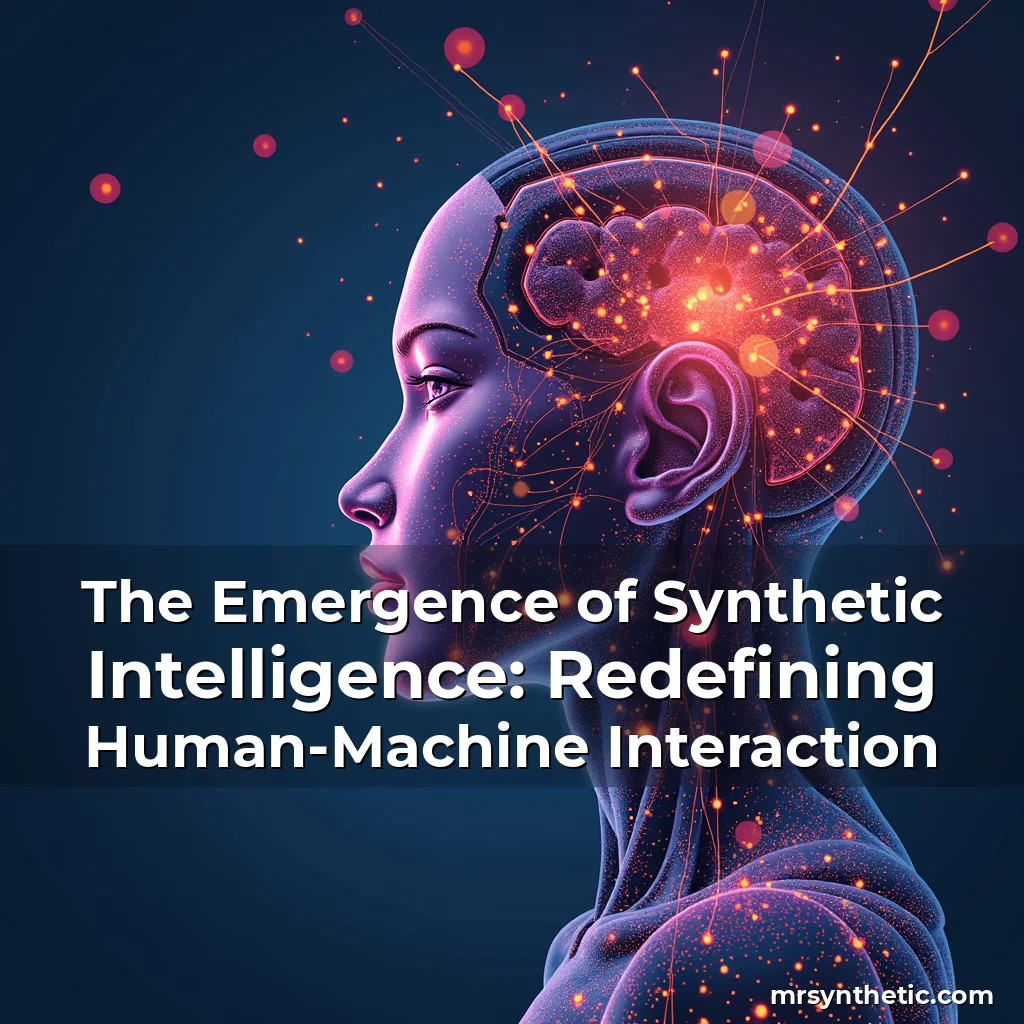
The Emergence of Synthetic Intelligence: Redefining Human-Machine Interaction
Synthetic Intelligence is revolutionizing how humans interact with machines by creating systems that can think, learn, and adapt autonomously. Unlike traditional artificial intelligence, which often relies on pre-programmed algorithms, SI leverages advanced computational models that simulate human cognition at an unprecedented level.
This transformative technology has already begun reshaping industries ranging from healthcare to finance through its ability to process vast amounts of data quickly while making decisions based on complex patterns rather than simple rule-based logic.
Fundamental Concepts Behind Synthetic Intelligence
Synthetic Intelligence operates on principles fundamentally different from conventional AI approaches. Instead of relying solely on static programming rules, SI utilizes dynamic neural networks capable of self-modification and continuous learning through experience.
These adaptive systems incorporate elements of both machine learning and cognitive computing to create entities that not only respond to stimuli but also anticipate needs and generate solutions independently. This capability allows them to handle tasks requiring creativity and problem-solving skills typically associated with human intellect.
The foundation of SI lies in three core components:
- Cognitive Architecture: A framework enabling systems to perceive, reason, and make decisions akin to biological organisms
- Evolving Algorithms: Self-improving mechanisms that refine performance over time without explicit reprogramming
- Autonomous Learning: Mechanisms allowing systems to acquire knowledge from diverse sources including sensory inputs and digital environments
By integrating these elements, developers have created platforms capable of performing sophisticated analyses across various domains. These include real-time language translation, predictive analytics, and even creative endeavors such as composing music or generating visual art.
One particularly intriguing aspect of SI is its capacity for contextual understanding. While traditional AI might struggle with ambiguous situations due to rigid programming constraints, synthetic intelligent systems can interpret nuances within their environment and adjust responses accordingly.
Distinguishing Features of Synthetic Intelligence
Synthetic Intelligence stands apart from other forms of AI through several distinctive characteristics that redefine what’s possible in automated decision-making processes.
Unlike narrow AI applications limited to specific functions, SI demonstrates broad adaptability across multiple contexts. It doesn’t merely follow instructions; instead, it formulates strategies and executes plans autonomously based on evolving circumstances.
The most notable difference between SI and classical AI lies in their approach to problem-solving. Traditional AI systems rely heavily on predefined parameters whereas synthetic intelligence employs emergent behaviors derived from accumulated experiences.
This distinction becomes especially evident when analyzing complex scenarios where variables change rapidly. For instance, in autonomous vehicle navigation, SI-powered systems can react dynamically to unexpected obstacles using learned behavioral patterns rather than strictly following scripted protocols.
Another defining trait is the system’s ability to engage in recursive reasoning – continually refining conclusions based on new information until reaching optimal outcomes. This iterative process mirrors human thought patterns more closely than any existing AI methodology.
Applications Across Industries
The impact of synthetic intelligence spans numerous sectors, transforming operational paradigms and unlocking previously unattainable efficiencies. In healthcare, for example, SI enables personalized treatment regimens tailored to individual genetic profiles and medical histories.
Financial institutions leverage SI capabilities for fraud detection by identifying subtle transaction anomalies that would remain undetected by conventional security measures. These systems analyze millions of transactions simultaneously while adapting to emerging threats in real-time.
In manufacturing, smart factories equipped with synthetic intelligence optimize production schedules dynamically based on supply chain fluctuations and equipment maintenance requirements. This results in significant reductions in downtime and resource wastage.
The entertainment industry benefits immensely from SI technologies used in game development and virtual reality experiences. Intelligent characters exhibit lifelike behavior through natural language processing capabilities enhanced by deep reinforcement learning techniques.
Transportation systems are undergoing transformation thanks to autonomous vehicles powered by synthetic intelligence. These vehicles don’t just follow traffic laws; they predict driver intentions and environmental changes to ensure safer road interactions.
Education is another domain experiencing radical shifts through SI integration. Adaptive learning platforms personalize curricula according to student progress tracking and cognitive styles, ensuring optimal engagement levels during each study session.
Ethical Considerations and Challenges
As synthetic intelligence continues advancing, ethical dilemmas surrounding its deployment become increasingly pressing issues for society to address. Concerns regarding algorithmic bias manifest when training datasets contain skewed representations leading to discriminatory outputs.
Data privacy represents another critical challenge since SI systems require extensive access to personal information to function effectively. Ensuring secure handling of sensitive data remains paramount to prevent unauthorized access or misuse.
Job displacement fears persist among workforce populations who worry about automation replacing human labor roles traditionally performed by people. Addressing this concern requires developing policies that facilitate workforce reskilling initiatives alongside technological adoption.
Misinformation risks arise from synthetic intelligence’s potential to generate convincing fake content indistinguishable from authentic material. Developing robust verification methods becomes essential to combat disinformation campaigns exploiting these capabilities.
Transparency in decision-making processes poses yet another hurdle. When SI systems produce recommendations or judgments, establishing clear audit trails helps maintain accountability and trustworthiness within affected communities.
Future Prospects and Technological Evolution
The trajectory of synthetic intelligence suggests continued exponential growth driven by advancements in quantum computing and neuromorphic engineering fields. Researchers envision future generations of SI systems exhibiting near-human comprehension abilities through hybrid architectures combining silicon-based processors with organic matter interfaces.
Predictive modeling indicates that by 2030, approximately 68% of global enterprises will integrate synthetic intelligence into their core operations. This projection underscores the technology’s anticipated role in shaping economic landscapes worldwide.
Emerging trends suggest increased emphasis on explainable AI frameworks designed specifically for synthetic intelligence applications. These developments aim to enhance user confidence by clarifying the rationale behind complex decisions made by autonomous systems.
Collaborative research efforts between academia and private sector organizations are accelerating innovation cycles. Joint ventures focused on developing ethical guidelines and regulatory standards help align technical progress with societal expectations.
International cooperation plays a vital role in managing cross-border implications arising from widespread implementation of synthetic intelligence technologies. Harmonized legal frameworks foster responsible usage while promoting fair competition across jurisdictions.
Preparing for the Synthetic Intelligence Era
Individuals seeking to thrive in the age of synthetic intelligence need to cultivate interdisciplinary competencies encompassing technical proficiency alongside soft skills crucial for human-machine collaboration.
Lifelong learning emerges as a fundamental requirement given the rapid pace of technological evolution. Educational institutions must evolve curricula to include courses focusing on AI ethics, machine learning fundamentals, and human-computer interaction design principles.
Business leaders face strategic challenges in determining optimal investment allocations towards synthetic intelligence integration. Balancing immediate cost considerations against long-term competitive advantages proves essential for sustainable organizational growth.
Governments play pivotal roles in regulating synthetic intelligence development through legislation addressing safety standards, employment protections, and consumer rights safeguards. Proactive policy-making ensures equitable distribution of technological benefits across demographics.
Citizens benefit from public awareness campaigns explaining synthetic intelligence capabilities and limitations. Informed societies better navigate transitions brought about by disruptive innovations affecting daily life routines.
Conclusion
Synthetic Intelligence marks a paradigm shift in our relationship with technology, offering unprecedented opportunities for innovation and efficiency across diverse domains. Its emergence signifies not just advancement in computing power but also deeper philosophical questions about consciousness itself.
To fully harness the potential of synthetic intelligence, stakeholders must adopt collaborative approaches prioritizing ethical responsibility alongside technical excellence. Embracing this transformative force requires cultivating curiosity, fostering open dialogue, and maintaining vigilance toward both possibilities and pitfalls inherent in such powerful tools.

news is a contributor at MrSynthetic. We are committed to providing well-researched, accurate, and valuable content to our readers.